
Across the community care sector, workforce stability has remained one of the most pressing challenges. From disability services to home and community-based services (HCBS), agencies are increasingly navigating a growing direct care workforce shortage.
But recent discussions around U.S. immigration policy are drawing attention towards the role immigration plays in sustaining the direct workforce.
For social care agencies delivering disability services, home-based care, and community support programs, this discussion is more than a policy debate. It is a direct reflection of how care systems process and function today, and more importantly, and how the future of the community care workforce will change.
The Role of Immigrant Workers in the Community Care Workforce
The direct care workforce in the United States has long been dependent on caregivers and human support professionals from around the world.
Research by PHI National indicates that immigrants constitute of approximately 28% of the long-term care workforce, a significantly higher share than their presence in overall U.S. labor force.
These care professionals are easily involved in a wide range of services, from community living and home-based support to disability services and support coordination. Their contributions allow individuals to live independently in their communities while helping human support agencies achieve two key goals of care management:
This highlights that the caregiver workforce shortage is closely tied to global workforce participation.
Why Governments Are Rethinking Benefit Policies
While the care sector clearly depends on immigrant workers, government decisions are shaped by a different set of priorities.
At the center of this is the “Public Charge” rule in U.S. immigration policy. This rule allows authorities to assess whether someone applying to live or work in the U.S. might rely heavily on government support or not.
As part of this, programs like Medicaid, SNAP (food assistance), and housing benefits are considered signals of potential long-term dependence on public resources.
But what could be the broader agenda of this policy?
This shows that the policy is not aimed at being restrictive, rather about balancing workforce needs with long-term economic sustainability.
Given these perspectives, this policy discussion seems to be also cover economic and policy sustainability concerns.
The Two Forces Shaping the Future of Care
Demand for Care Is Accelerating
While workforce discussions continue, the demand for human support and care services is increasing steadily.
Population projections indicate that Americans aged 65 and older could represent nearly 23% of the population by 2060, up from roughly 18% today.
For care agencies supporting individuals with disabilities and those receiving home and community-based services (HCBS), it means:
Why Workforce Stability Matters Inside Human Care Agencies
Care services and the entire human support industry in general heavily depends on relationships.
And so, consistency within care teams allows professionals to build trust with the individuals and families they support. Hence, when agencies have stable teams, the entire care environment becomes more predictable and supportive. The benefit from:
But workforce pressures can also create operational strain inside organizations. Workforce stability in healthcare is essential for maintaining consistent and high-quality care delivery.
The Operational Reality for Human Service Agencies
‘Documentation’ and ‘administrative workflows’ continue to be two of the most common challenges within the industry. Between service notes, compliance reviews, monitoring requirements, and communication with families, teams spend a significant amount of time managing operational tasks.
While documentation and compliance are essential parts of quality care, agencies are increasingly exploring ways to ensure these responsibilities support the mission of care rather than slow it down. As workforce conditions evolve, the bigger opportunity for social care agencies lies in their ability to adapt to change.
Here are three ways agencies can enable themselves to adapt change:
Agency leaders need to think ‘What can we do to reduce internal strain’.
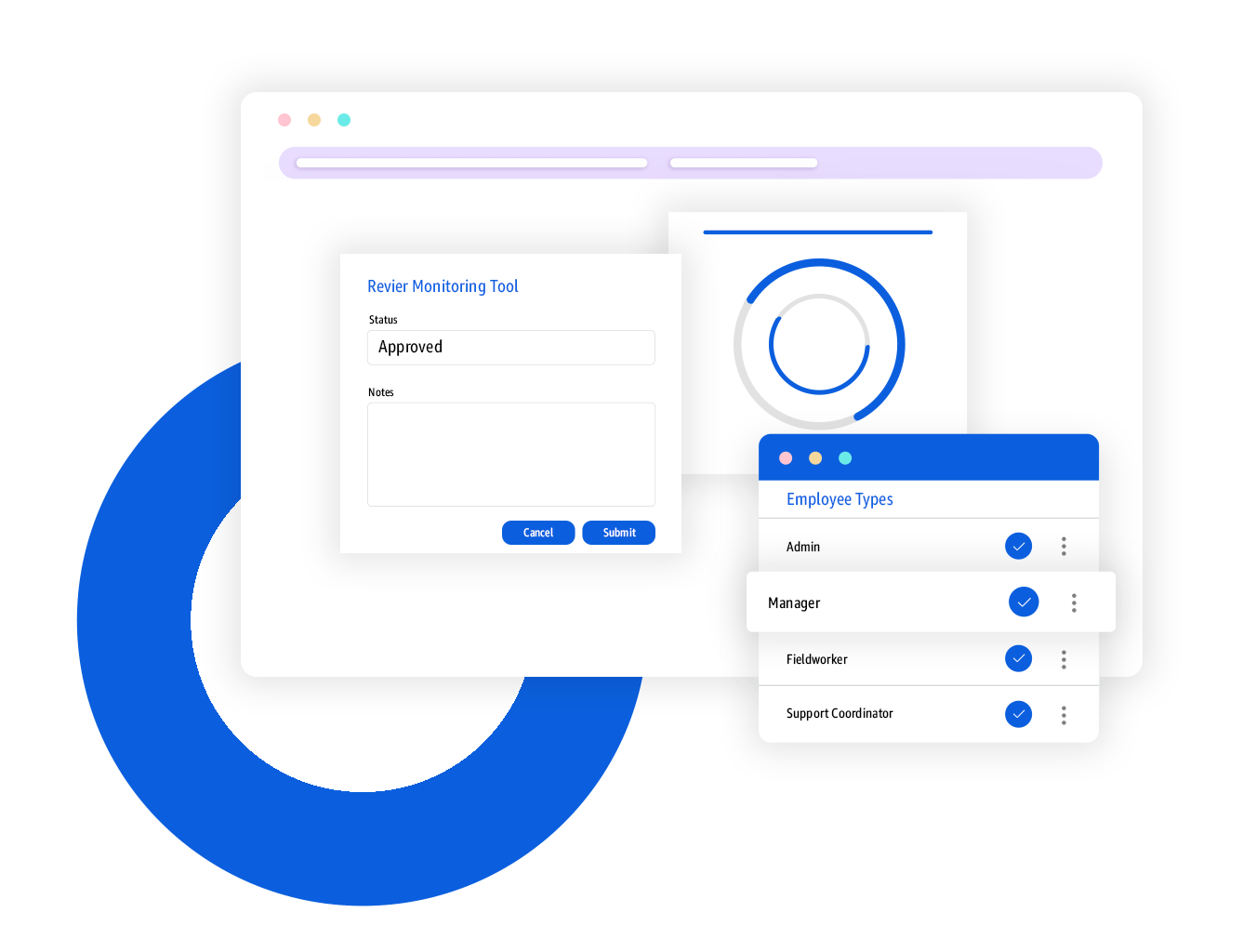
Some of the ways FieldWorker has helped agencies tackle this question is by streamlining workflows, standardizing documentation processes, and improving visibility across programs through the FieldWorker Platform.
With more than 14 tools readily accessible to care professionals, teams spend less time switching between tools. They have quicker access to their documents, and better features to share updates with their teams and clients.
With workforce changes happening as dynamically as regulatory changes, it is essential that human support agency leaders have a resilient system in place. This means a system that continues even when team retention fluctuates.
At FieldWorker, we enable our clients maintain long-term sustainability by ensuring the platform is easy to use, and engage with even for first time users. With shorter learning curves and long-term usability we have supported several professionals, and helped them multiply their efforts with user-friendly technology.
At FieldWorker, we constantly encourage our clients vision and experience with our platform. This helps us make FieldWorker as personalized as possible for every agency.
Modern case management works beyond capturing data, it focuses on being an intelligent support partner for our clients. This means identifying incomplete documentation early, reducing administrative duplication, and improve team coordination.
Helping support professionals to shift from managing systems to focusing on delivering care.
From Documentation Systems to Intelligent Support Platforms
For many years, case management technology focused primarily on record-keeping and reporting. Today, a new generation of systems is emerging. Instead of simply storing information, modern care management platforms help agencies:
These capabilities allow human support agencies to operate with greater clarity and confidence.
When systems are designed around real agency workflows, professionals can spend less time understanding ‘how’ softwares work and more time focusing on the individuals they support.
Preparing for the Future of Community Care
The debate around immigration policy and workforce stability is complex and has many arguments to it, and with all the right intentions.
Immigrant caregivers continue to play an essential role in sustaining the system, even as governments weigh long-term economic considerations and care demand steadily rises.
In this evolving landscape, the real differentiator for human support agencies will be how effectively they adapt to ongoing change, rather than picking a side to align with.