
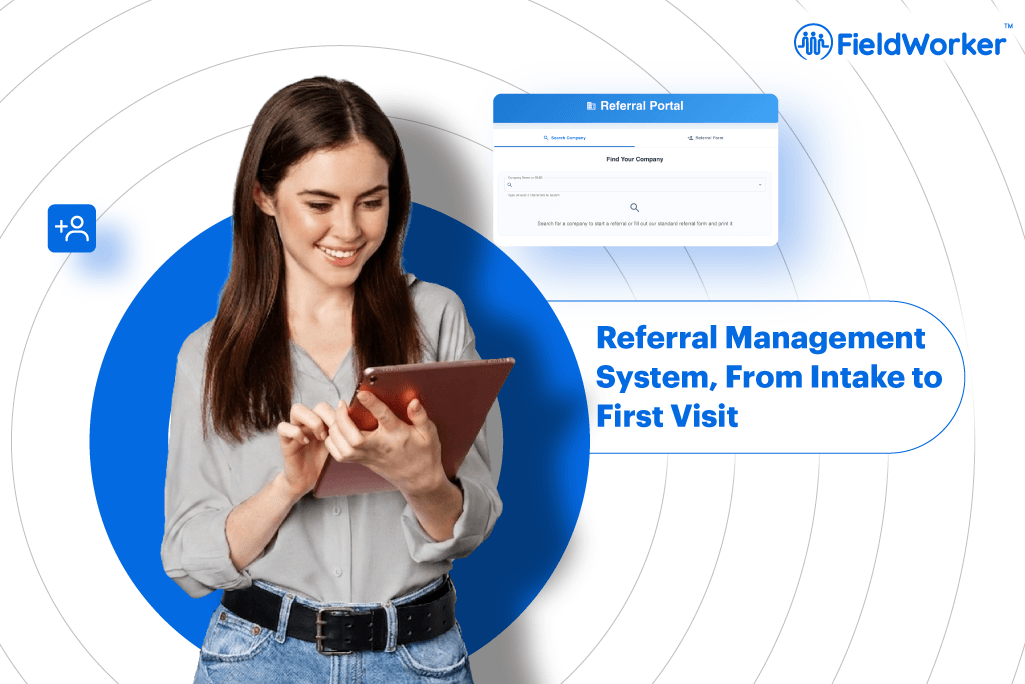
When a referral comes in today, how easily can your team trace its journey to ensure a smooth, timely transition to that first case visit?
The reality is that a referral on paper doesn’t automatically mean support has begun. For many families, the journey to actually receiving care is incredibly fragile. Data shows that out of all the individuals who try to connect with a social service referral, only about 36% ultimately receive the assistance they need. Somewhere between that initial outreach and the first visit, too many people are quietly slipping through the cracks.
Apart from disconnected tracking systems, workforce shortages continue to put immense pressure on human services, forcing over 60% of community-based I/DD providers to make the heartbreaking decision to turn away new referrals. Even among case management teams, nearly 60% struggle to connect individuals to active services because there aren’t enough available providers to take them on.
When your team is already balancing these heavy administrative and systemic hurdles, managing 30 to 40 individuals at any given time becomes an overwhelming process. Each person is at a different stage of their transition, each has outstanding tasks waiting for follow-up, and each has an anxious family on the other end waiting for news.
Continue reading to walk through what a healthy process looks like, where teams typically lose ground in the process, and how a supportive, closed-loop referral system can strengthen your infrastructure, so no one gets left behind.
Understanding the Referral Process in the Social Care
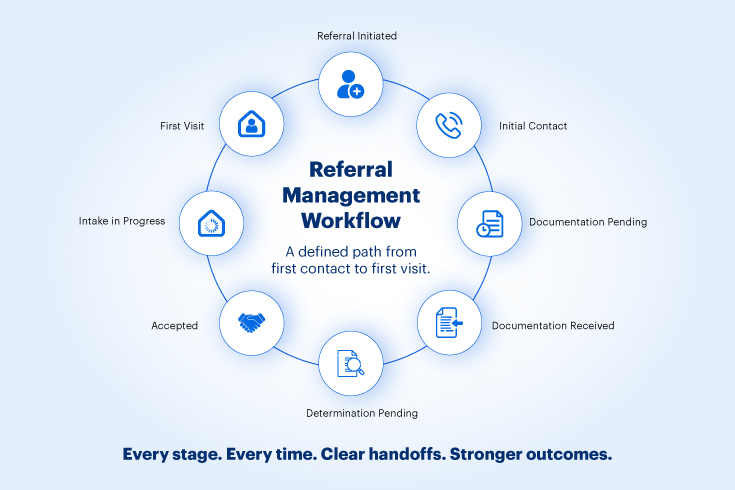
A well-structured referral management workflow moves through all the eight steps as shown above. Referrals come in as intakes but do not convert to first visit because almost all of these processes happen on separate disconnected systems.
Three reasons social care agencies notice referral delays
Most referrals or intake delays are structural problems. Across IDD and human services agencies, three specific gaps in the referral management tracking process are responsible for the majority of delays, missed handoffs, and compliance issues.
By the time a referral reaches the DSP heading to the first visit, a lot of information has been gathered along the way. This includes the individual’s background, the family’s specific concerns, the goals outlined in the person-centered support plan, and the notes the support coordinator shared when she made the referral. That context represents weeks, sometimes months, of relationship building.
When it doesn’t travel with the initial referral and remains in the intake of coordinator notes or a folder, no one else can access. The DSP arrives knowing only the basics. And the individual and their family, who have been waiting a long time for this moment, meet someone who is just beginning to learn who they are.
As a referral moves forward, documentation is requested, and then it leaves someone’s hands with no system to follow it. No automated reminder. No flag when something has been sitting too long and no single view that shows what’s outstanding across all active referrals.
Documentation delays don’t just slow intake; they affect how reliable an agency appears to the partners who keep referrals coming in.
This one tends to surface later, when a consent form at the initial stage was not captured in the right format, authorization dates that don’t align, and incomplete information was passed at the time of intake. Weeks later, it shows up as a flag, a rejected claim, an EVV issue that takes time to untangle.
All the three instances listed above are signs of a process that didn’t have the right checkpoints in place from the start. And so, a well-structured referral management process can build those checkpoints, so every stage of the referral process is built in a visible, trackable, and manageable manner.
Referral Management Systems for the Care Ecosystem
Here’s what a referral management system makes possible, stage by stage,
Agency Leadership: Full Agency Visibility and Financial Safeguards
For agency leadership, managing by memory introduces administrative gaps that directly threaten billing and audit readiness. FieldWorker protects the agency’s operational health from the top down:
Intake and Case Coordinators: Clear Ownership and Process Control
Generally, the intake team usually works with several open files simultaneously. FieldWorker replaces manual, disconnected tracking with structured workflow automation, giving coordinators complete control over the process:
Field Staff and DSPs: Mobile-First Context and Connected Care
The final handoff rests with the professionals delivering direct care. FieldWorker ensures that the relationship built during intake travels safely into the field through the mobile application:
How FieldWorker’s Referral Management Software Supports IDD and Human Services Agencies
FieldWorker’s referral management software is built specifically for IDD, human services, and social care agencies managing high-volume intake-to-first-visit workflows.
Instead of relying on disconnected spreadsheets, emails, paper forms, and manual follow-ups, agencies manage the entire referral journey through one visible and trackable system.
For agencies navigating complex intake coordination across multiple stakeholders, FieldWorker provides the operational infrastructure needed to make referral workflows visible, accountable, and scalable.
Want to see how FieldWorker manages the intake-to-first-visit workflow? Explore the referral portal.
Want a live walkthrough? Book a demo.