

It’s 4:45 on a Friday. A case manager has six client updates left to log, a referral to follow up on, and a call with a family in ten minutes. She knows the information she needs is somewhere in the system. The question is: how long will it take to find it?
For social workers and case managers, moments like these are common. Managing clients means keeping track of case notes, contacts, referrals, projects, tasks, documentation, and ongoing communication, all while making sure the right information is available when it is needed.
That’s why the convenience of case management software matters.
A convenient platform isn’t simply one with fewer clicks or a cleaner interface. It is one that reduces the mental effort required to manage the work. Can you find what you need, understand the context, and take action without unnecessary navigation?
This is the north star for FieldWorker.ai as we continue to build and evolave.
Convenience starts with less mental load
Case management is already complex. Social workers and case managers coordinate across multiple clients, service providers, family members, resources, case notes, and administrative requirements. The work itself requires constant attention and decision-making. And so the social work case management software supporting that work shouldn’t add another layer of complexity.
When a case manager has to remember where a particular piece of information lives, switch between multiple screens to understand a client’s recent activity, or navigate away from a profile to take a simple action, the system is making the work harder than it needs to be.
The goal of a good social work case management platform is to make the information and actions a case manager needs easier to access. This way the system supports the agency’s unique workflow, and managing the admin work more effectively.
With that in mind, convenience can be looked at through three simple questions: can I find it, can I understand it, and can I act on it?
1. Find what you need, the moment you need it
One of the simplest sources of friction in case management software is knowing where to start looking. Is the information under a customer? A contact? A project?
This becomes especially difficult when a case manager managing multiple active cases has to remember the system’s structure before searching for information.
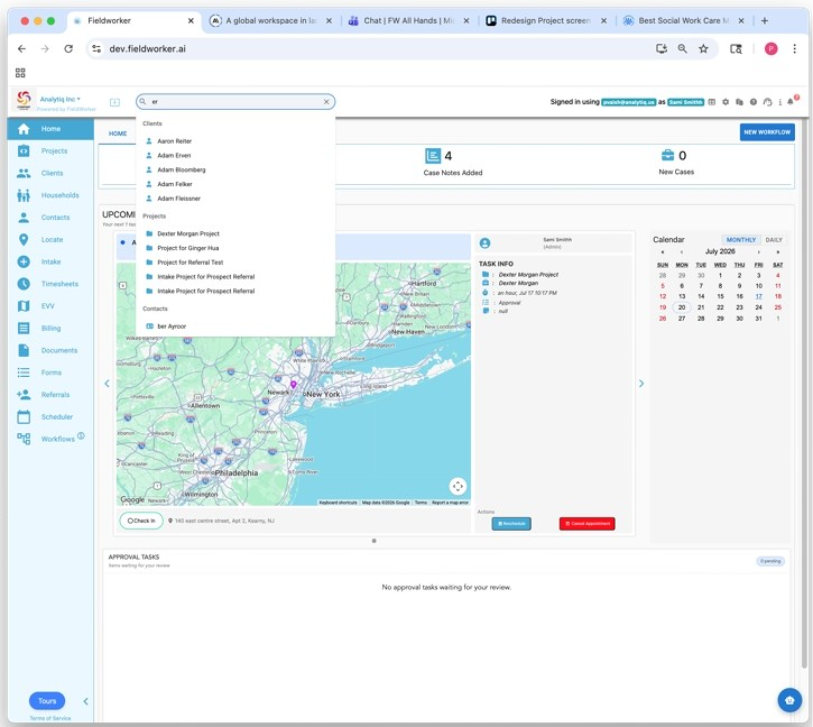
FieldWorker.ai’s global search is designed to remove that first decision. From the homepage, case managers can search across customers, contacts, and projects in one place. The benefit isn’t simply having a search bar, it’s being able to start with what you know rather than having to first figure out where the system expects you to look.
That small difference can make everyday navigation feel much more natural.
2. Understand the complete case story
Finding a client’s record is only the beginning. Case managers also need to understand what has happened recently and what may need attention next, and that’s where context becomes important.
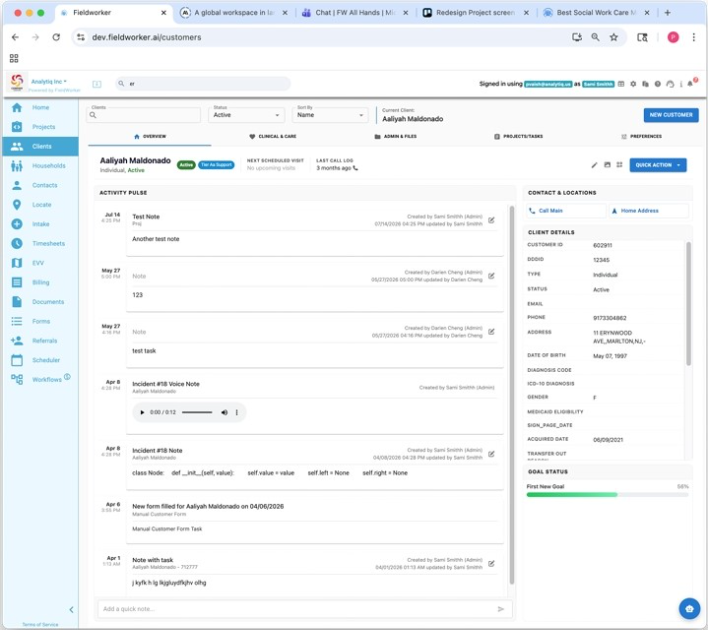
The redesigned Customer Center brings together a pulse of recent activities and customer interactions, giving users a more accessible view of what is happening around a client. Instead of treating information as separate pieces that have to be assembled, the experience brings relevant activity closer together.
Think about preparing for a family conversation, picking up a case that another team member has been working on, or simply reviewing a client’s recent activity before deciding what needs to happen next. The less time spent reconstructing that context, the more naturally the case manager can move into the work itself, and this is where convenience becomes more than navigation. It becomes context.
3. Move from information to action more easily
Case management isn’t just about finding and reviewing information. Once a case manager knows what needs to happen, they need to act on it.
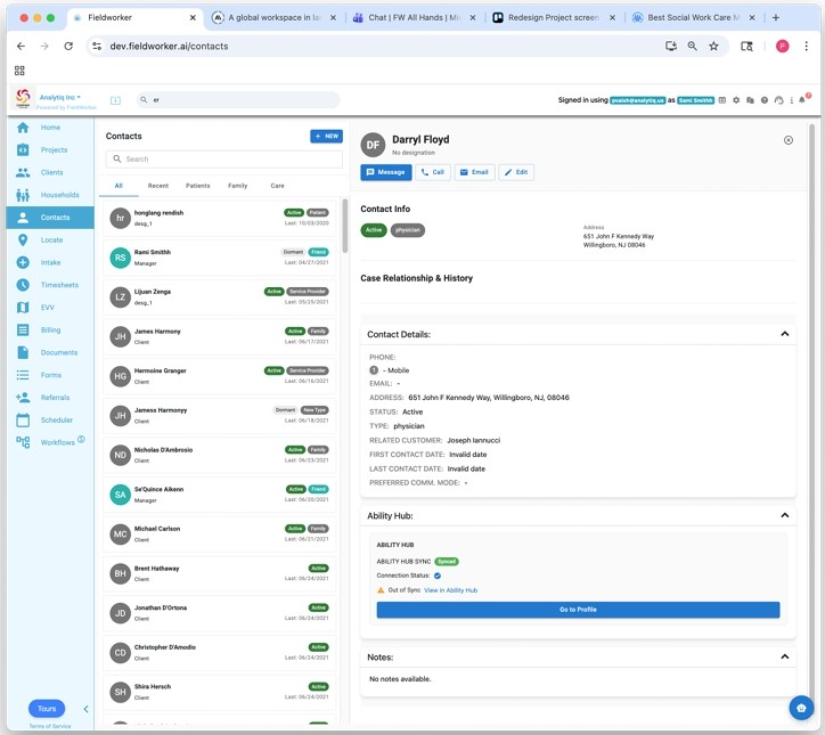
The redesigned Contact Center is built around quicker actions and more efficient access to information, while also supporting integration with AbilityHUB.
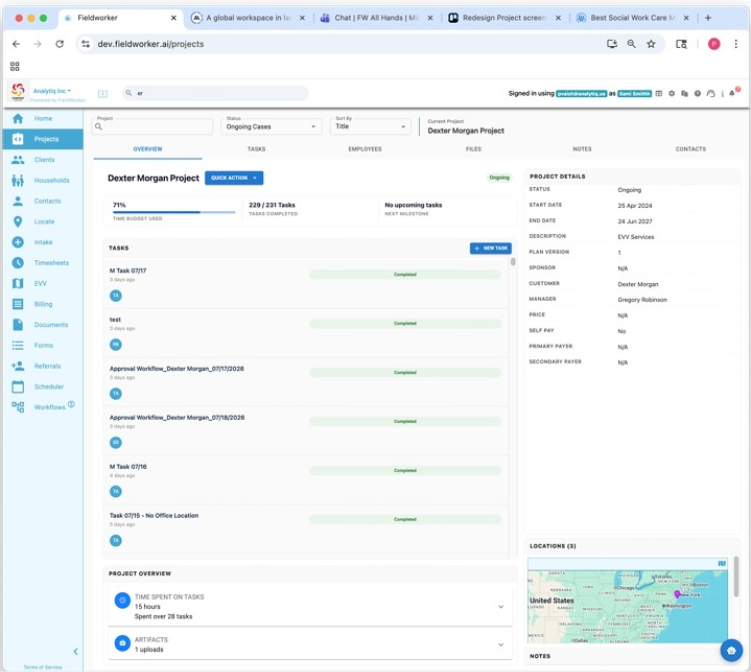
Similarly, the redesigned Project screen provides better access to key project information, making it easier to work with the details that matter.
These changes may seem small when viewed individually, but that’s the point. Convenience in case management rarely comes from one dramatic feature. It comes from removing the small obstacles that appear throughout the day: finding information, opening the right screen, understanding what has happened, and figuring out what to do next. When those steps feel more connected, the work feels more manageable.
Why convenience matters more in social work
In many industries, software efficiency is primarily an operational concern. In social work particularly, it is also a human one.
A case manager’s time is divided between documentation, coordination, follow-ups, communication, and direct support. Every unnecessary step in the software takes attention away from one of those responsibilities.
That doesn’t mean every extra click has a measurable impact on a client’s outcome. It means that when case management software consistently makes everyday tasks harder than they need to be, the friction compounds across the workday. The right social work platform should help case managers spend less time figuring out the software and more time managing the work.
That is particularly important as agencies manage increasingly complex workflows and larger volumes of client information. A case management platform needs to make information accessible without having the user remember how every part of the system is organized.
What should convenience look like in 2026 and beyond?
The best case management platform isn’t necessarily the one with the longest list of features. It’s the one that makes the features, information, and workflows a case manager already needs feel easier to use.
That is the kind of convenience that can make a case management platform feel less like another system to manage and more like a tool that supports the work. As social work continues to evolve, the technology behind it should evolve in the same direction: less friction, clearer context, and a more natural way to get the work done.
FieldWorker.ai is building toward that standard not by adding complex features but by making everyday case management easier to navigate, understand, and acton.