
Managing a social services organization involves coordinating multiple responsibilities, from client intake and case documentation to scheduling, billing, and reporting. When these activities are handled through spreadsheets or disconnected systems, agencies can experience duplicated work, communication gaps, documentation delays, and difficulties tracking service delivery.
This is why many organizations rely on social work case management software to centralize their operations.
A comprehensive social services software platform can bring together client records, case notes, service plans, scheduling, Electronic Visit Verification (EVV), billing, document management, and reporting. Having these tools in one system can help agencies reduce administrative work, maintain accurate records, and improve coordination across their teams.
When evaluating social services case management software, agencies should consider their service model, compliance requirements, team size, and the features they need to manage daily operations.
Below are five platforms worth considering in 2026.
Which Case Management Platform Fits Your Agency’s Needs?
1. Apricot by Bonterra — Nonprofit and Program Management
Rating: 4.2/5
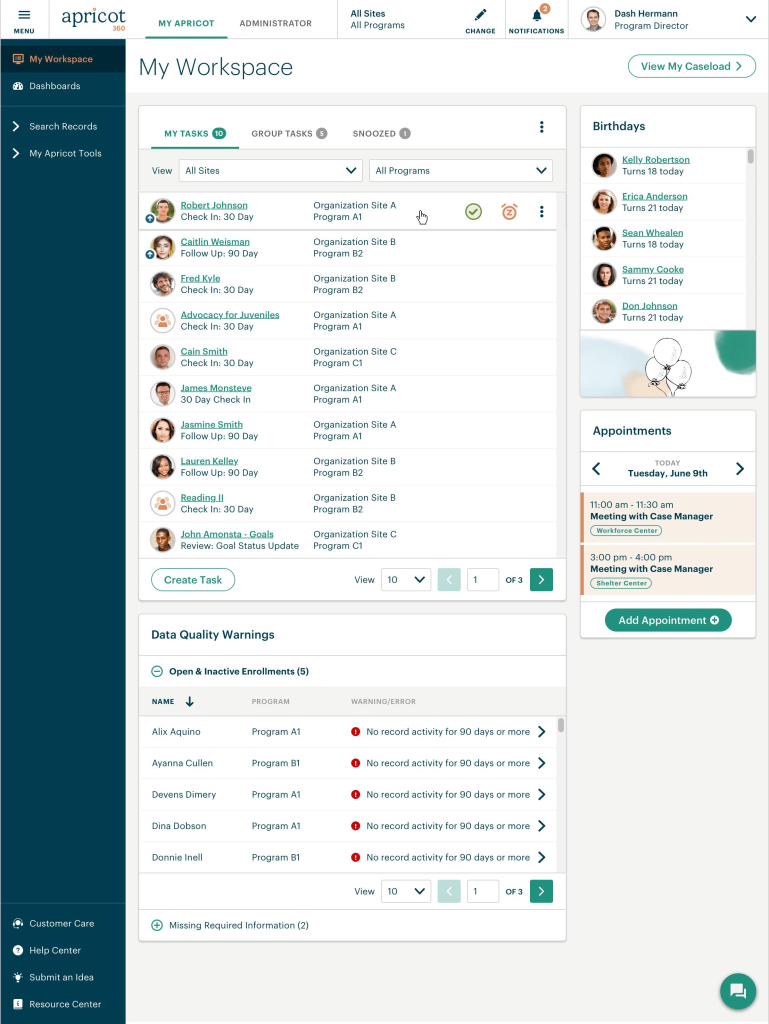
Apricot by Bonterra helps nonprofit organizations and public-sector agencies manage participant information, programs, service delivery, and outcomes.
Its features include customizable forms, participant records, case management, workflow automation, and reporting. These tools help organizations organize client information, track program participation, and prepare reports for funders and program evaluations. Role-based permissions and other access controls help administrators manage sensitive records.
TrustRadius reviewers highlight Apricot’s customizable reporting, centralized client information, and flexible data management. Software Advice reviews similarly praise its adaptable client documentation and privacy controls. However, reviewers on these platforms also report challenges with reporting limitations, system performance, and data exports.
Best suited for: Nonprofits and public-sector organizations managing multiple programs, participant records, grant reporting, and program outcomes.
2. CaseWorthy — Human Services Case Management
Rating: 4.4/5
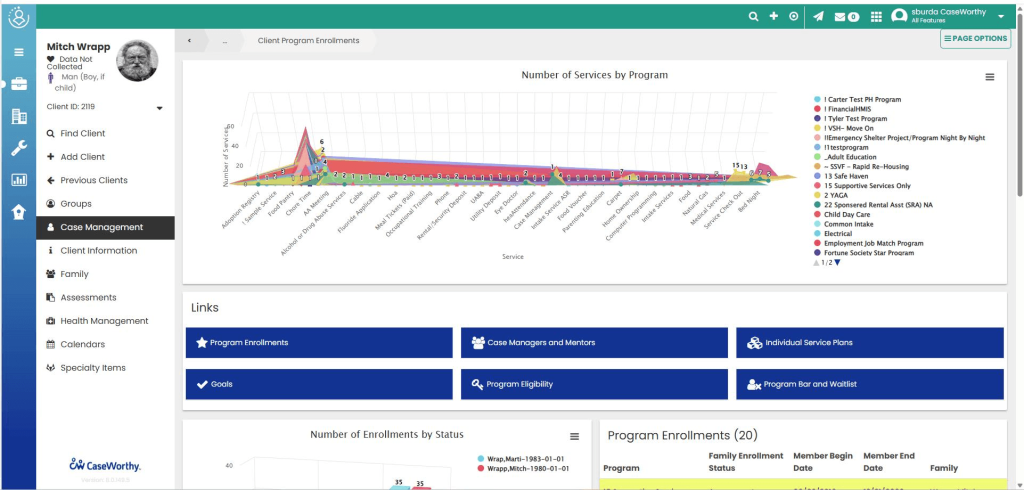
CaseWorthy offers configurable software for human services organizations, nonprofits, and government agencies.
The platform supports client intake, assessments, service plans, case notes, and program management. Its configurable workflows and reporting tools help organizations manage different service requirements, monitor client progress, and prepare funder reports.
Capterra reviews of CaseWorthy also highlight its ability to accommodate different human services requirements, including case management and billing needs. One reviewer described the value of its flexibility for a large nonprofit working across multiple service areas. Other feedback points to an initial learning curve for administrators, particularly during training and implementation.
CaseWorthy also offers specialized applications. For example, its MediSked solution supports scheduling, documentation, and billing for home- and community-based services.
Best suited for: Human services organizations and government agencies managing multiple programs, complex service workflows, and reporting requirements.
3. CharityTracker — Nonprofit and Community Case Management
Rating: 4.5/5
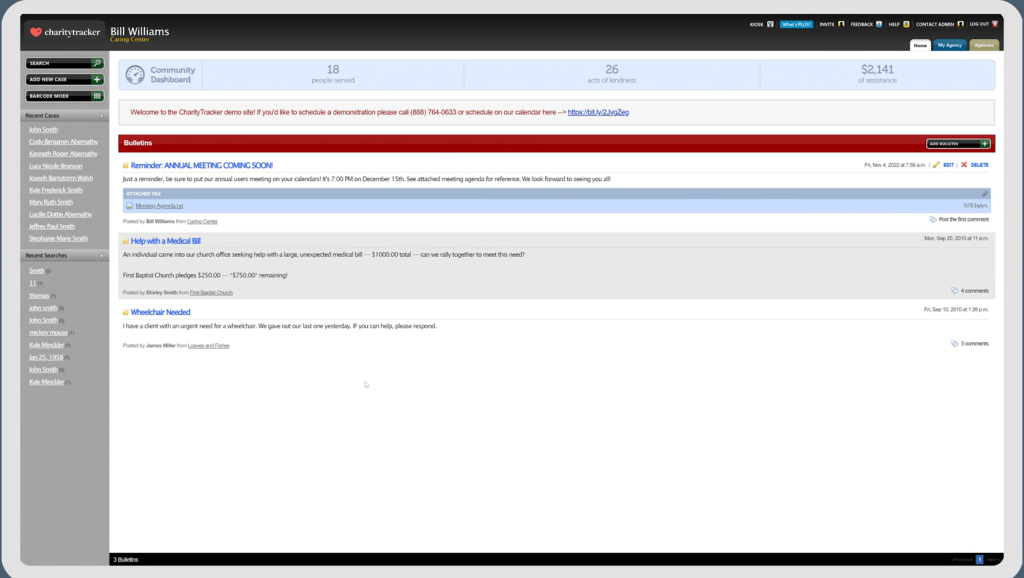
CharityTracker is designed for nonprofit and community-based organizations that coordinate client assistance, referrals, and shared services.
The platform centralizes client profiles, household information, case notes, assistance records, referrals, appointments, and outcome tracking. These features help organizations understand what support clients have received, coordinate follow-ups, and reduce duplication across participating agencies.
GetApp reviewers value CharityTracker’s shared client database, agency collaboration, and reporting capabilities. Capterra feedback also highlights how outcome tracking helps organizations connect services with clients’ progress toward self-reliance. However, some reviewers identify limitations in custom reporting, file handling, and the management of shared client information.
Unlike platforms focused on payer revenue cycles, CharityTracker emphasizes community assistance and resource coordination.
Best suited for: Small and midsize nonprofits and community organizations coordinating assistance, referrals, shared services, and client outcomes.
4. Casebook — Configurable Human Services Software
Rating: 4.2/5
Casebook provides configurable case management software for social services nonprofits, human services organizations, and government agencies.
Its features cover client intake, assessments, case notes, service planning, workflow automation, and outcome tracking. Centralized records help teams follow client progress across cases, while reporting tools support program evaluation and service-delivery analysis. The platform also offers integrations with tools such as Google Calendar, Microsoft 365, Jotform, and Zapier.
Capterra reviewers have praised Casebook’s mobile-friendly interface and its ability to customize client information so teams can maintain consistent case notes. However, feedback also highlights challenges with initial setup, rigid custom forms, and reporting on customized data.
Best suited for: Human services organizations and nonprofits seeking configurable case management, structured documentation, service planning, and outcome reporting.
5. FieldWorker — Social Work and Human Services Case Management
Rating: 4.7/5
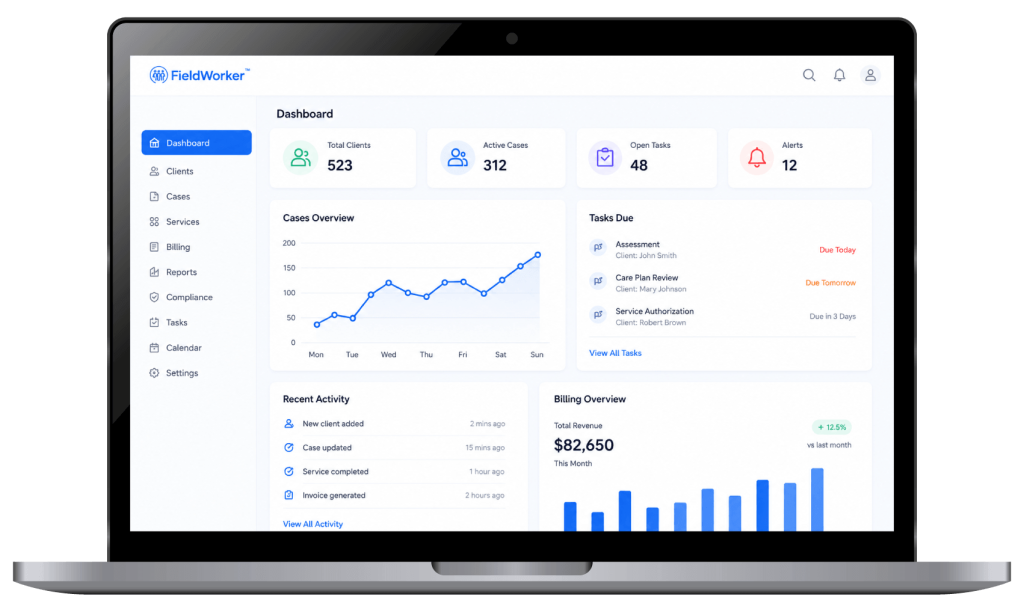
FieldWorker provides case management and agency management software for social workers, home care agencies, and human services providers.
The platform brings together client records, case notes, scheduling, EVV, time tracking, and billing-related workflows. Staff can record visits, document services, coordinate schedules, and maintain information needed for billing and claims processes. Its monitoring tools and reports also help agencies track documentation and operational requirements. Some billing and claims capabilities depend on the modules selected.
Reviews on GetApp highlight FieldWorker’s client management, case notes, and document management capabilities. These features are particularly relevant to agencies trying to centralize records and reduce fragmented workflows. Its review profile also identifies reporting and ease of use as areas users evaluate, making it worthwhile to test reporting workflows during a demo.
Best suited for: Human services agencies and I/DD and HCBS providers looking to connect case management with field operations, EVV, documentation, and billing.
|
Platform |
Key capabilities |
Pricing/subscriptions |
Free trial |
|---|---|---|---|
|
FieldWorker |
Case management, EVV, scheduling, billing, documentation and reporting |
From $199/month |
Yes – 14 days |
|
Apricot |
Participant management, forms, workflows and analytics |
Custom quote |
Yes* |
|
CaseWorthy |
Intake, case management, configurable workflows and reporting |
Custom quote |
Yes* |
|
CharityTracker |
Client tracking, referrals, assessments and reports |
From $20/user/month |
Yes – 14 days |
|
Casebook |
Case records, intake, service planning and workflow automation |
From $29/user/month |
No |
Questions to Ask Before Choosing a Case Management Platform to Reduce Administrative Work for Your Agency-
Before scheduling a demo or committing to a solution, agencies should evaluate the following questions.
Can the platform manage the complete service delivery cycle?
Can staff handle intake, assessments, service plans, case notes, scheduling, and follow-ups without repeatedly entering the same information?
Does the software support billing and revenue cycle management?
Can visit records, time tracking, approvals, and EVV information feed into billing and claims workflows? Does the system help identify incomplete documentation before claims are submitted?
How does the software help with compliance and audit preparation?
Can administrators track missing documents, maintain audit trails, monitor service requirements, and generate reports for funders and regulatory reviews?
How is sensitive client information protected?
Does the platform offer appropriate access permissions, secure document storage, data-sharing controls, and the contractual protections your organization requires?
Can the system integrate with existing tools?
Check compatibility with your payroll, accounting, electronic records, scheduling, and reporting systems. Confirm whether integrations are included or require additional configuration.
What will implementation involve?
Ask about data migration, customization, staff training, onboarding, ongoing support, and the resources required to maintain the system.
Conclusion
Choosing the right social services case management software depends on an organization’s service model, operational requirements, and the needs of its team.
While some platforms focus on nonprofit program management and community assistance, others provide more specialized capabilities for human services, disability support, and care coordination.
Before selecting a platform, agencies should evaluate how well it supports their daily workflows, including documentation, scheduling, billing, EVV, reporting, and compliance requirements.
The right case management tools for social work should help organizations reduce administrative complexity, maintain organized records, and coordinate services more effectively. Ultimately, the best solution is one that aligns with the organization’s needs and supports consistent, quality service delivery.